

Retrieval-Augmented Generation (RAG) has become the standard method for grounding LLMs in accurate information. It is useful, powerful, and essential for reducing hallucinations. However, as organizations move beyond static Q and A use cases into true automation, research support, decision workflows, and multi-step operations, traditional RAG reaches its limit.
Why?
Because classic RAG retrieves, but it does not reason, act, validate, or adapt.
This is where Agentic RAG steps in. And it is where SmythOS lifts the concept from experimentation to production-grade autonomy.
What Is Agentic RAG?
Traditional RAG follows a single-pass pattern:
- Retrieve context
- Generate an answer
Agentic RAG transforms that flow into a closed-loop reasoning system:
- Retrieval informed by agent intent
- Tool use such as APIs, actions, or workflows
- Multi-step reasoning
- Output validation and correction
- Adaptive re-retrieval based on what is missing
- Stateful memory and contextual awareness
- Decisions governed by policy instead of guesswork
Instead of merely answering questions, Agentic RAG solves problems.
SmythOS: The Agent Operating System
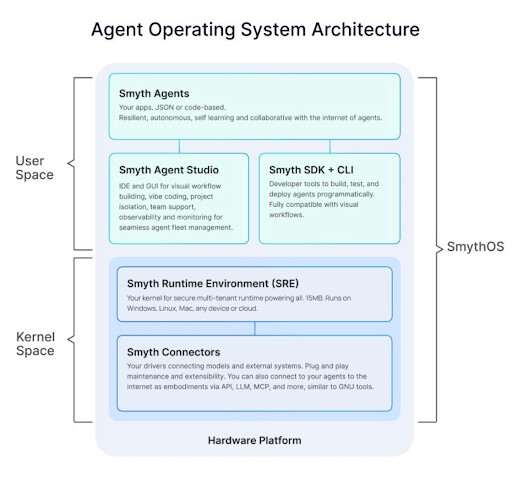
The architecture diagram illustrates a critical point: SmythOS is not an SDK or framework. It is a full operating system designed specifically for autonomous agents, built across user space and kernel space to provide stability, governance, and extensibility.
Here is how each layer contributes to reliable Agentic RAG:
User Space
Smyth Agents
Agents can be JSON-based or code-based. They are resilient, autonomous, and capable of self-learning and collaborating with other agents through standardized interfaces.
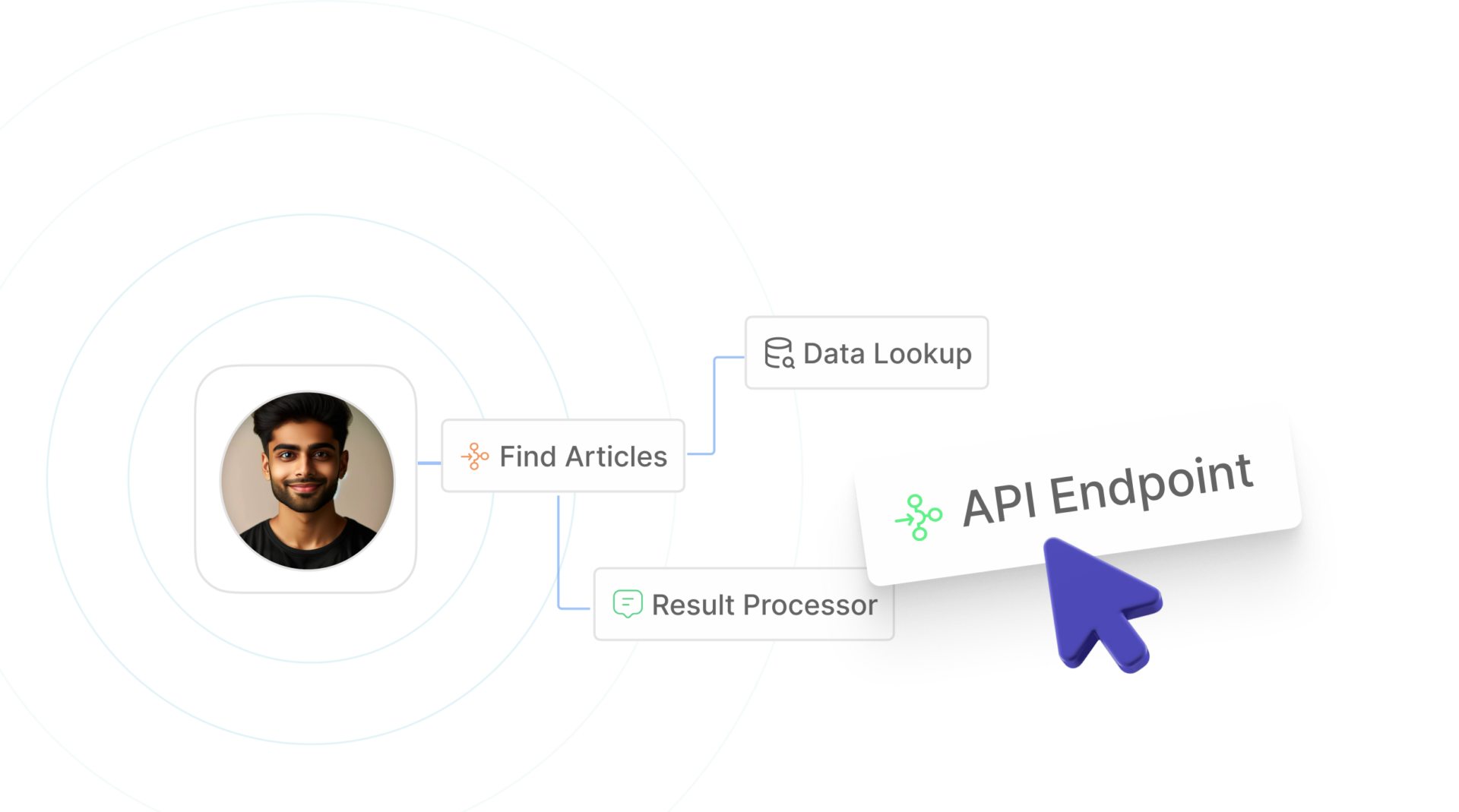
Smyth Agent Studio
A complete IDE and GUI for building visual workflows, isolating projects, supporting teams, and monitoring entire agent fleets. This makes complex multi-step Agentic RAG pipelines accessible to both developers and non-developers.
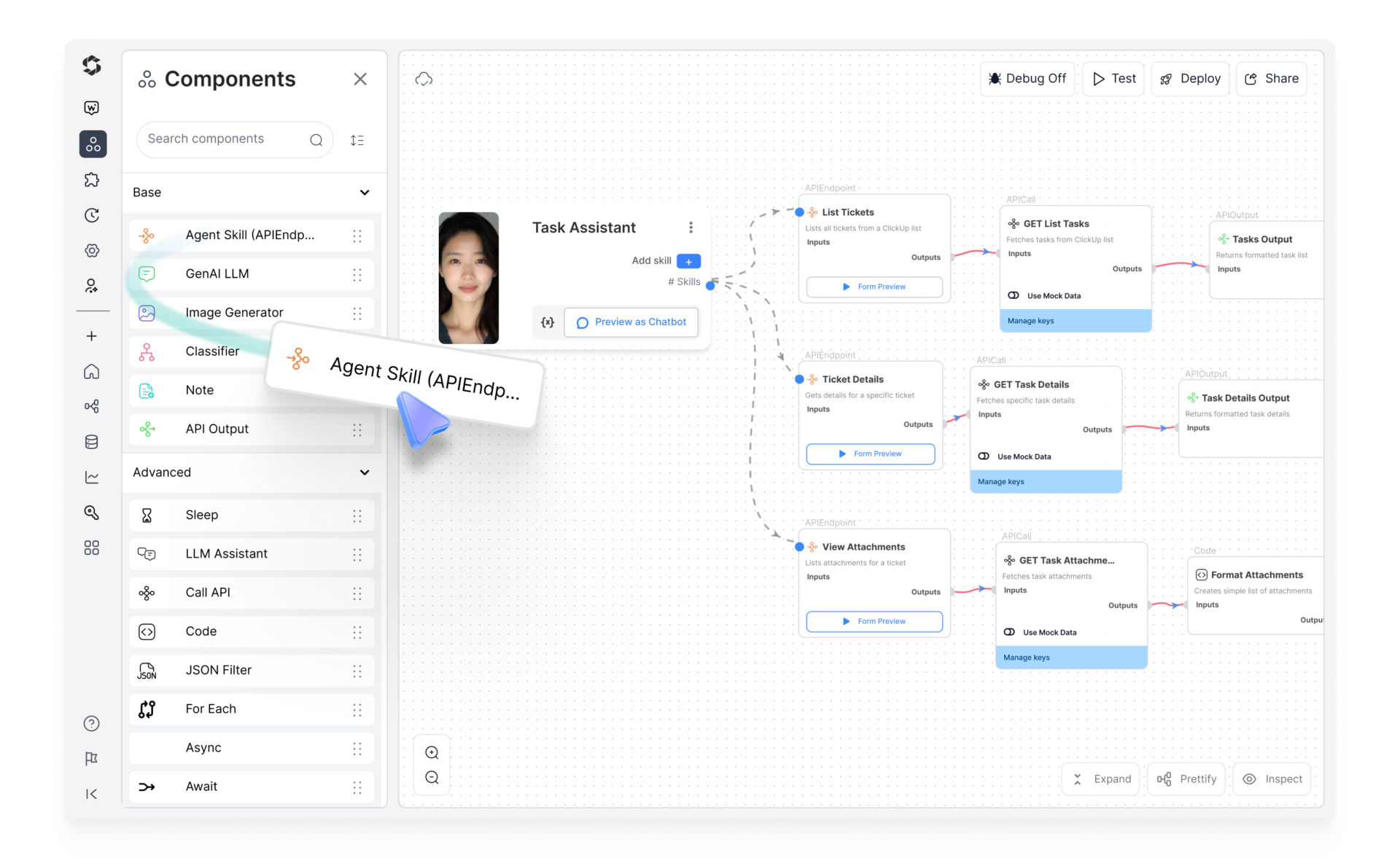
Smyth SDK and CLI
Developer tools for building, testing, and deploying agents programmatically. Fully compatible with visual workflows, giving technical teams the flexibility to automate or optimize deeper logic when needed.
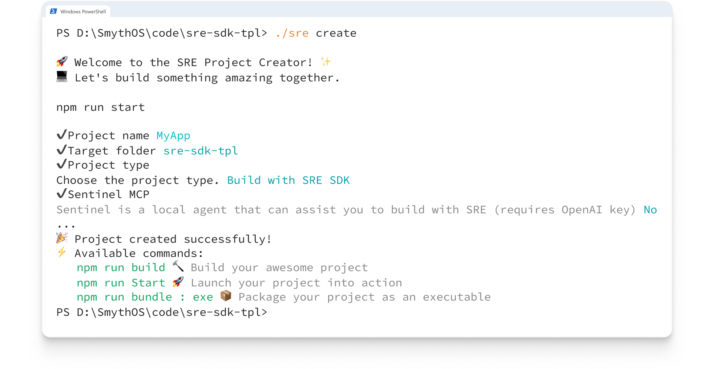
Kernel Space
SmythOS Runtime Environment (SRE)
A lightweight 15 MB secure, multi-tenant runtime that powers all agents. The SRE runs on Windows, Linux, Mac, and virtually any device or cloud environment.
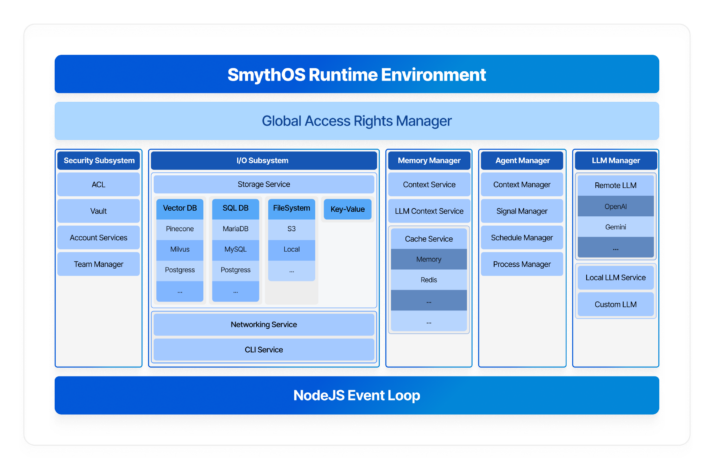
This is what transforms RAG from a prompt technique into a governed, repeatable, production-ready execution model.
SmythOS Connectors
Drivers that connect agents to models, APIs, databases, cloud apps, and external systems. These connectors are plug-and-play with built-in maintenance and extensibility. They allow agents to interact with the outside world similarly to how operating systems use device drivers.
Together, these components form the SmythOS Agent Operating System, enabling developers to build reliable Agentic RAG pipelines that operate with the same rigor and governance as traditional software systems.
What SmythOS Brings to Agentic RAG
SmythOS is more than another agent framework. It is a true runtime designed to make autonomous systems safe, observable, and production ready.
Below are the core features SmythOS delivers, each linked to supporting resources for deeper exploration.
1. Identity-First Agent Architecture
Every agent in SmythOS has its own identity with no shared API keys or global tokens. Agents operate with roles, scopes, and permissions tied directly to the resources they can access.
Learn more in the SmythOS Developer Guide.
2. A Wide and Growing Ecosystem of Connectors
Agents in SmythOS can interact with APIs, databases, business applications, cloud services, and workflow tools through a broad and expanding library of integrations. These tools are fully governable, observable, and designed for production use.
Explore the connectors on the SmythOS GitHub repository.
3. Role-Based Access and Execution Control
SmythOS provides role-based access control at the team and space level, so every user and agent operates under clearly defined permissions. Component-level debugging and execution control let you see exactly how your agent behaves at each step before anything reaches production.
See how SmythOS compares to others in the platform comparison guide.
4. Visual Workflow Orchestration
SmythOS provides a visual interface for chaining tools, reasoning steps, validators, retries, and human-in-the-loop actions. This accelerates the creation of complex agent workflows without brittle scripting.
An overview is available on SitePoint.
5. Flexible Data Processing and Validation
SmythOS gives you the building blocks to validate and categorize data however your workflow requires. The Classifier component routes inputs into custom categories using natural language, the Code component lets you write custom JavaScript logic for validation rules, and GenAI LLM components can process and transform data at any step. You decide where and how these safeguards fit into your agent’s workflow.
Details are available in the SmythOS Docs.
6. Full Observability Across Every Agent Run
SmythOS captures logs, traces, run histories, and replayable executions. This gives teams complete visibility into agent reasoning, action chaining, and decision outcomes for debugging and governance.
See the model in the SmythOS GitHub repo.
7. Zero-Trust, Enterprise-Grade Architecture
With strict egress controls, memory segmentation, scoped access, and complete audit logging, SmythOS enforces a zero-trust model for autonomous systems.
Learn more in the SmythOS platform comparison.
How to Try Agentic RAG in SmythOS
Here is a simple process teams can use to evaluate Agentic RAG inside SmythOS and understand how it performs in a real workflow.
1. Create or clone an existing agent
Select a current RAG agent or build a new one inside Agent Studio. This provides a baseline for comparison.
2. Add retrieval, reasoning, and tool steps
Chain retrieval, actions, validation steps, and memory access through the visual workflow builder. This creates a closed-loop Agentic RAG pipeline, rather than a single-pass RAG flow.
3. Enable policy rules and validation
Apply allow and deny rules for retrieval, tool use, network access, and data handling. This shows how Agentic RAG behaves under real governance conditions.
4. Run test prompts through the workflow
Use a mix of simple and complex tasks. Review how the agent retrieves information, reasons, takes actions, and adapts when information is missing or incomplete.
5. Analyze observability data
Review logs, traces, run histories, and step performance metrics. This reveals how the agent thinks, revises, adapts, and validates outputs during the full reasoning cycle.
Why Agentic RAG Matters Now
Organizations are moving from simple retrieval-driven answers to AI agents that run real business processes:
- Customer support
- Research and analysis
- Data transformation
- Workflow automation
- Compliance review
- Knowledge operations
Traditional RAG cannot support these workloads. Agentic RAG can, but only if the runtime beneath it is engineered for accuracy, reliability, and governance.
This is exactly what SmythOS was built to provide.
The Bottom Line
Agentic RAG is not simply the next iteration of RAG. It is the foundation for truly autonomous enterprise systems.
SmythOS delivers everything required for real-world deployment:
- A secure and stable runtime
- Per-agent identity
- Step-level governance
- Dynamic retrieval
- Autonomous tool use
- Full validation and observability
- Safe and repeatable workflows
With SmythOS, teams move from retrieval-enhanced answers to validated, governed, production-grade autonomy.
Call to Action
Your organization is ready for Agentic RAG. The question is whether your platform is. With SmythOS, the answer becomes yes.
Request a demo and see what real autonomy looks like.
Like what you see? Star our repo, and learn more via our docs and YouTube channel.